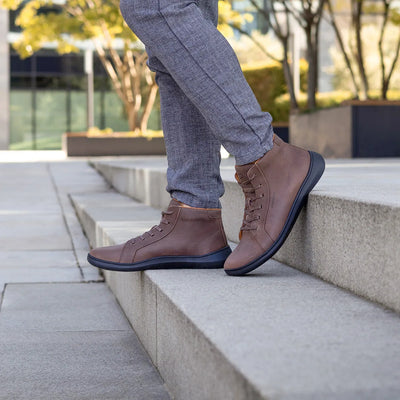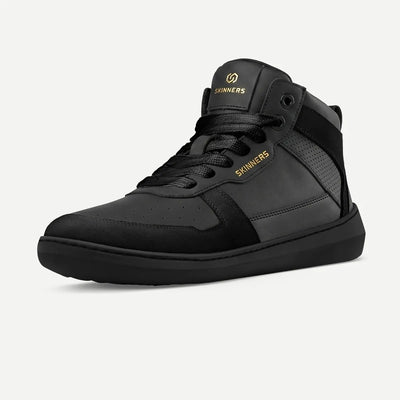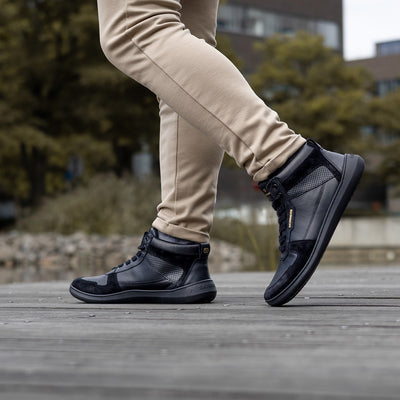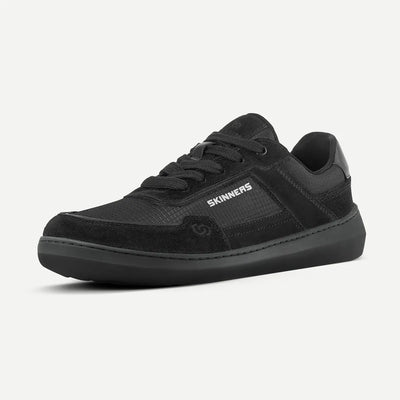




Weeks 1–4: every third day
Start with a few hours, e.g. on your way to work or on a walk. Wear your regular shoes on the days in between.

Shoes that let your feet do what they were built for. And look good while they're at it.
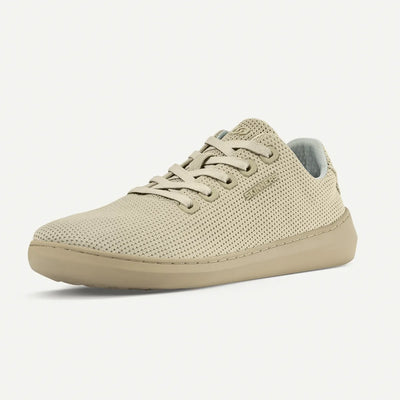
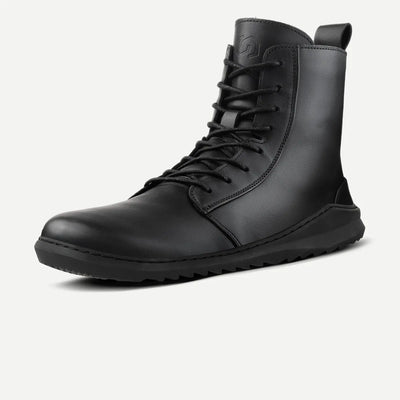
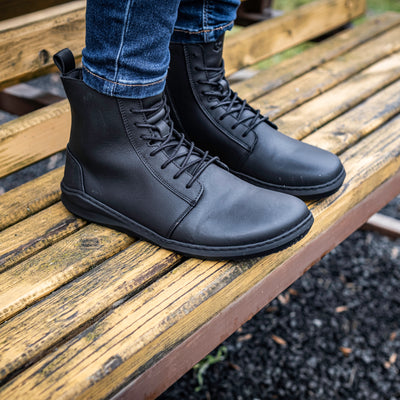
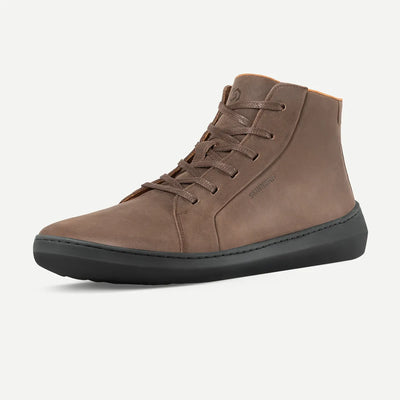
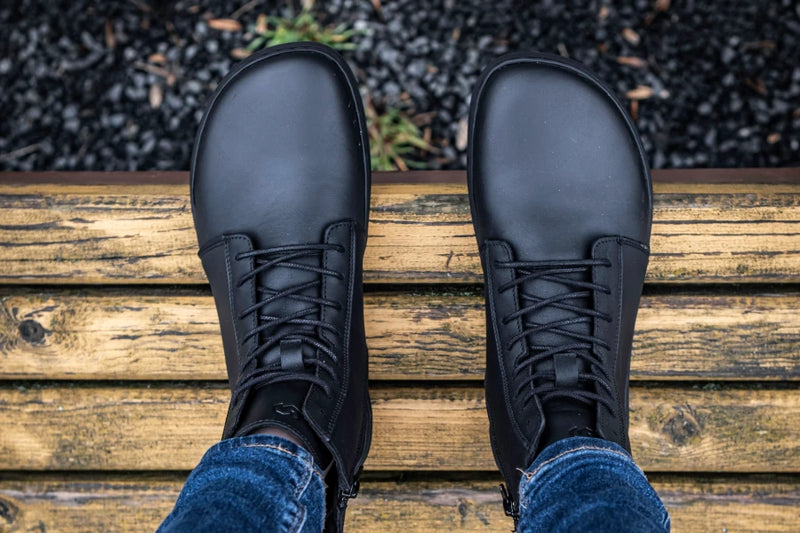
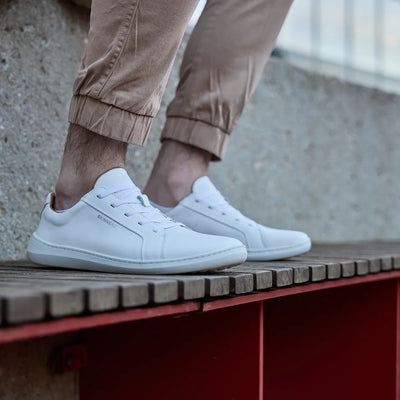
Barefoot shoes come as close as possible to walking barefoot while still protecting your feet. They don't squeeze your foot, don't raise your heel and don't restrict its movement.
You can recognise them by three things: a wide toe box, zero drop and a flexible sole.


Your toes have room to spread. Nothing presses them together, so your foot can splay naturally with every step.

Heel and toe sit at the same height. Your centre of gravity stays where it belongs and your body doesn't have to compensate for a raised heel.

The shoe bends with your foot and doesn't get in its way. Your foot feels the ground and your muscles do the work instead of a rigid construction.
The muscles in your feet work with every step. Wear barefoot shoes regularly and you strengthen them without even thinking about it.
Your foot gets more information about the ground and your body can react to it faster. You stand and walk more steadily.
A wide toe box respects the natural shape of your foot. It helps prevent squeezed toes, blisters and bunions.
Without a raised heel you stand straighter and spread your weight across the whole foot.
When the whole foot gets involved, knee, hip and lower-back pain caused by cushioning and an unnatural stride in conventional shoes often eases.
Research into barefoot footwear is still young, but the first studies are clear. People who switched from conventional shoes to minimalist footwear had noticeably stronger feet after just a few months. And they stood and walked more steadily in barefoot shoes than in conventional shoes with cushioning and arch support.
It makes sense. Your feet are full of muscles and nerve endings. Give them room and they start using them.

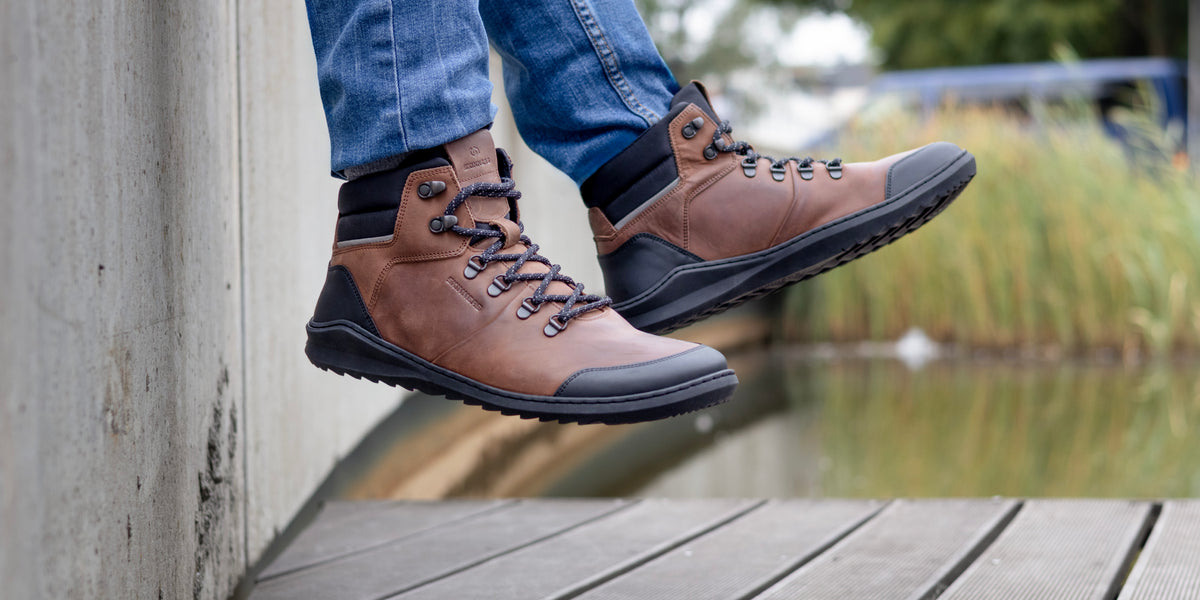
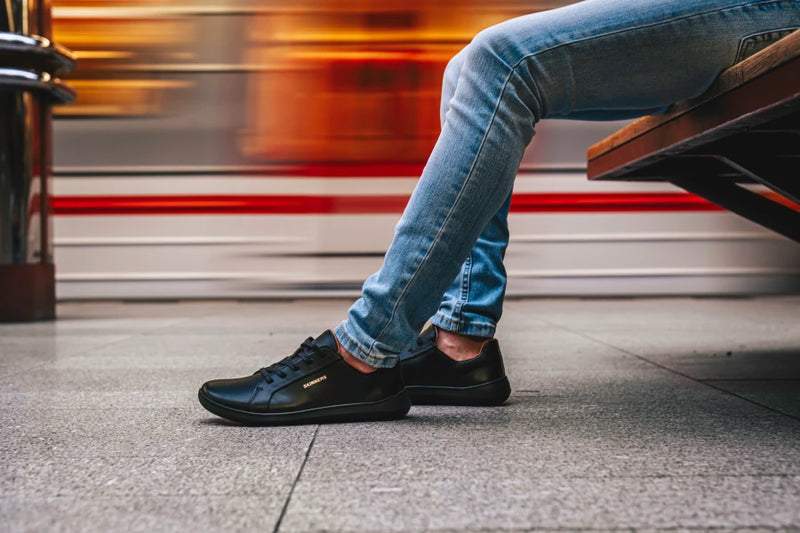
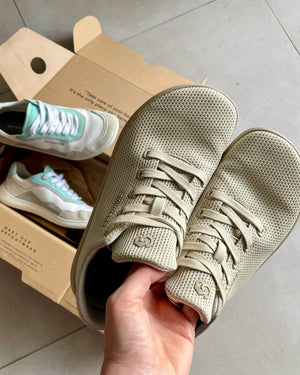
Barefoot shoes stopped being just for the woods a long time ago. Today, most people wear them every day in the city, to work, to meetings and out to dinner. That's exactly what we design them for.
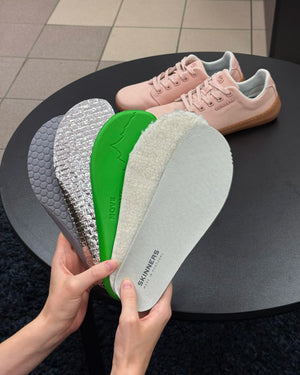
A wide toe box and zero drop are the basics. On top of that we add what you notice most in the city: clean design, quality materials and an insole that keeps you comfortable all day. Shoes you feel good in, and nobody can tell you're wearing barefoot shoes.
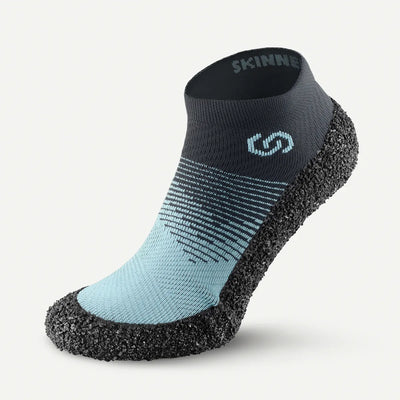
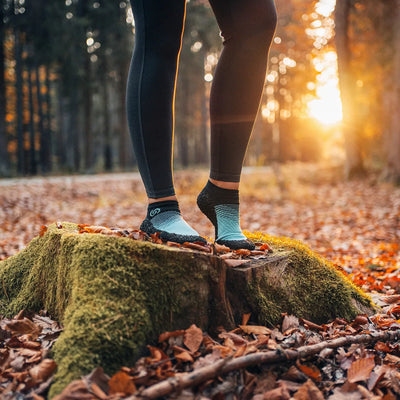
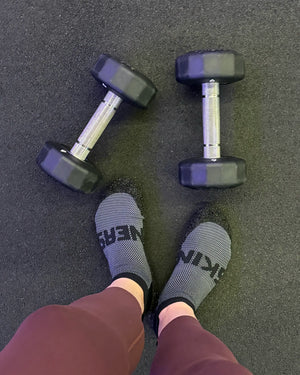
And if you want to go fully barefoot in nature, there are our sock shoes. They give you the most natural contact with the ground.
– anyone who wants healthy, strong feet
– people who walk a lot, in the city and in nature
– children whose feet are still developing
– anyone whose regular shoes pinch their toes
– you have diabetes or reduced sensation in your feet
– you have soft-tissue inflammation in your foot or are recovering from an injury
– you have a significant orthopaedic foot condition
– you need protective footwear for work, e.g. on a building site
In these cases, talk to a doctor or physiotherapist before switching to barefoot shoes.
Start with a few hours, e.g. on your way to work or on a walk. Wear your regular shoes on the days in between.
If nothing hurts, step it up. Slightly tired calves are normal: your muscles are waking up.
Your feet are used to it and you can wear barefoot shoes every day.
This is a rough guide. If something hurts, take a step back and give your feet time.
For most people, yes. They strengthen your feet and respect their natural shape. Make the switch gradually, though, and if you have any foot problems, talk to a specialist first.
The height difference between heel and toe. Conventional shoes often have a drop of around 10 mm or more; barefoot shoes have zero drop.
People with diabetes, reduced sensation in their feet, soft-tissue inflammation in the foot or a recent injury should be careful. In these cases, talk to a doctor or physiotherapist first.
Absolutely. Most barefoot shoes, including ours, are made for everyday wear in the city. Ours also have a comfortable insole, so you'll be fine in them all day.
Allow about six months. For the first 2–4 weeks, wear barefoot shoes every third day, then every other day. After about six months your feet are used to them and you can wear them every day. We describe it in detail in How to switch to barefoot shoes.
Muscles that haven't worked for years may make themselves known, most often your calves. That's why we recommend starting slowly and building up gradually.
Measure your foot and leave some room for your toes. You'll find a detailed guide on our size guide page.
Yes. Our winter models with the Flowsense™ sole are made for cold days. For extra warmth, add our thermal insoles.

This policy will take effect on 9 December 2024.

This policy will take effect on 9 December 2024.

 45.592 Ft